
A framework for understanding identity, power, and resource allocation in social life.
Human beings do not exist as isolated individuals. We live through identities—some chosen, others imposed—constantly navigating roles such as citizen, parent, professional, believer, or outsider. These identities shape how we act, how we are treated, and how we understand ourselves.
Identity Group Theory (IGT) offers a structured way of understanding this complexity. It views identity not as a fixed essence, but as a dynamic system of group memberships through which individuals allocate time, energy, and other resources in pursuit of meaning, recognition, and stability.
Rather than asking who we are, IGT asks:
How do we manage who we are across competing identities?
Core Ideas
- Individuals belong to multiple identity groups simultaneously
- Identity is dynamic, strategic, and resource-based
- All identity groups are structured, regulated, and hierarchical
- Human behavior reflects trade-offs between competing identities
How IGT Works
[ Figure 1: IGT Domains]
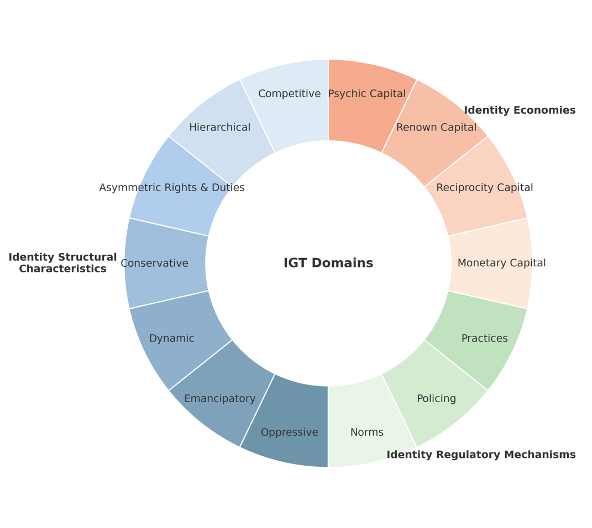
Identity groups operate through three core domains:
- Structure (hierarchies, competition, roles)
- Regulation (norms, practices, policing)
- Economies (how resources like time, status, and money are distributed)
Explore
- The Theory → conceptual framework
- Examples → how identity works in real life
- Publications → research and papers